What Does an Architect Actually Do? A Guide for Self-Builders
When you’re thinking about building your own home, you probably expect an architect to design it and prepare drawings.
And yes, that’s part of the job.
But architecture is about much more than drawing a house.
From assessing a site and navigating planning to developing the technical details and helping you make hundreds of decisions along the way, an architect can be involved throughout the journey from an empty site to a finished home.
So what does an architect actually do during a self-build?
1. We start by listening
Before drawing anything, we need to understand you.
How do you live now? What works in your current home? What drives you mad? How do you spend weekends? Do you entertain regularly? Do you work from home? Are you dreaming about a huge kitchen or would you rather have a cosy snug?
Then there are the practical questions.
Your budget. The size of home you need. Your site. Your timescale. Your priorities.
A good brief isn’t simply a list of rooms.
It’s an understanding of the life the house needs to accommodate.
2. We help you understand the site
Every site brings something different to the project.
Orientation, views, access, neighbouring properties, levels, existing trees, landscape and planning context can all influence the design.
An architect looks at those things together.
Where should the house sit? Where will the best light come from? Which views should be captured? Where should the garden be? How should you approach the house?
Rather than choosing a house and placing it onto a plot, the site should help shape the architecture.
3. We turn your ideas into a design
This is the part most people imagine when they think about working with an architect.
Early concepts begin to explore the size, shape and arrangement of the house.
Plans develop.
Rooms begin to connect.
Windows start framing views.
The relationship between inside and outside becomes clearer.
But this isn’t simply about making the house look good.
We’re constantly balancing your brief, site, budget, planning considerations, construction and the way the house will actually function.
Good design is often about resolving several problems with one move.
4. We help navigate planning
For many self-builders, planning is one of the most intimidating parts of the process.
An architect can assess the planning context, develop an appropriate design response and prepare the architectural information required for an application.
Planning considerations shouldn’t suddenly appear once the house has been designed.
They should form part of the design process from the beginning.
That gives the project a much stronger foundation than designing your dream house first and asking planning questions afterwards.
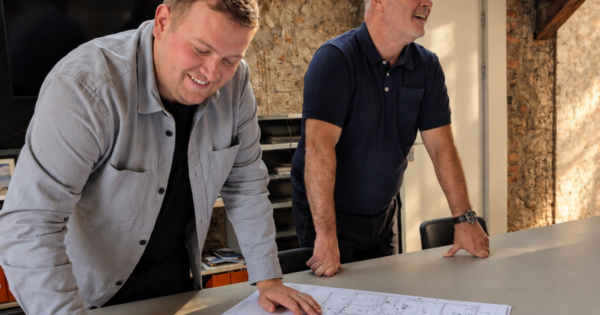
5. We develop the detail
Planning drawings aren’t construction drawings.
Once the project progresses, considerably more information is needed to turn the design into something that can actually be built.
Dimensions, construction details, materials, junctions and technical requirements all need to be considered.
This stage might not produce the glamorous images that end up on Instagram, but it has a huge influence on the quality of the finished building.
The details matter.
6. We coordinate the bigger picture
A new home involves more than an architect and a builder.
Depending on the project, structural engineers, energy consultants, surveyors and other specialists may all contribute.
Someone needs to understand how those different pieces relate to the overall design.
Architecture sits at the centre of many of those conversations.
The goal is to keep the original design intent intact while resolving the practical information required to deliver it.
7. We help you make decisions
There are a remarkable number of decisions involved in building a house.
Windows.
External materials.
Floor finishes.
Doors.
Lighting.
Sanitaryware.
Joinery.
Ironmongery.
And approximately a thousand things you had probably never considered before starting a self-build.
Not every decision requires an architect, but having an overall design direction makes those choices much easier.
Instead of treating each item separately, you can ask whether it contributes to the home you’re trying to create.
8. We help keep the budget part of the conversation
Budget and design shouldn’t exist separately.
The size and form of the house, structural decisions, glazing, materials and specification can all affect cost.
That means budget needs to be considered while the design is developing, not introduced once everything has already been decided.
There will almost always be compromises somewhere.
The important thing is understanding your priorities so that when decisions need to be made, you know which elements are worth protecting.
9. Our job is not to design our house
It’s to design yours.
One of the most enjoyable things about residential architecture is that every client is different.
Some people love traditional architecture. Others want something distinctly contemporary.
Some want large sociable spaces. Others value smaller, cosier rooms.
The architect’s job isn’t to impose a predetermined style.
It’s to take your brief, your site, your budget and your ambitions and bring them together into a coherent piece of architecture.
More than a set of drawings
At the end of a project, you will have drawings.
But those drawings are really the record of hundreds of decisions that came before them.
Where the house sits.
How you arrive.
Where morning light enters.
How rooms connect.
What you see when you walk through the front door.
How the building meets the landscape.
How the materials come together.
And ultimately, how the house feels to live in.
That’s the real value of the design process.
Thinking about starting a self-build?
You don’t need to arrive at your first meeting with everything figured out.
In fact, we’d rather you didn’t.
Bring the site, the ideas, the questions and even the things you aren’t sure about.
At Slemish Design Studio Architects, we can help turn those early conversations into a clear direction for your new home and guide the project through the stages that follow.