How to Make a New Build Feel Like It Has Always Belonged
One of the biggest fears people have when designing a new home is that it will feel too new.
Not new in the sense of being fresh, comfortable or beautifully finished, but new in the sense that it feels disconnected from its surroundings. A house that could have been placed on almost any site, anywhere.
The homes we find most interesting tend to have a different quality. Even when the architecture is contemporary, there is something about them that feels settled.
They respond to the landscape, borrow from the character of their surroundings and use materials that feel appropriate to the place.
So how do you create a new home that feels as though it belongs?
1. Start with the place
Before thinking about architectural styles, start by looking at what’s already there.
The landscape, neighbouring buildings, mature trees, hedgerows, views, levels and even the approach to the site can all tell you something about how a new house might respond.
In a rural setting, this can be particularly important.
Rather than treating the site as an empty plot waiting for a house, we look at it as part of the design brief.
Where should the house sit? Which views should it capture? Where is it exposed? Where does it feel sheltered? What will you see as you approach it?
Those decisions begin to root the architecture in its setting before materials have even been chosen.
2. Get the proportions right
Character doesn’t necessarily come from adding more detail.
Often, it comes from getting the basic proportions right.
The relationship between walls and windows, the pitch and scale of a roof, ceiling heights, openings and the overall mass of a building can have a huge influence on how convincing a home feels.
This is particularly important when taking inspiration from traditional architecture.
Simply adding traditional details to a modern house won’t automatically give it character. The proportions underneath those details need to make sense too.
Sometimes the simplest elevations are the ones that require the most thought.
3. Use local architecture as inspiration, not a template
Designing a home that belongs in its setting doesn’t mean copying an old house.
Traditional buildings can provide incredibly useful clues about scale, form, materials and how buildings historically responded to the landscape.
A simple pitched roof, a familiar material or the proportions of an agricultural building can all become starting points for something much more contemporary.
The aim isn’t imitation.
It’s understanding why certain buildings feel right in a particular place, then interpreting those qualities in a way that suits modern life.
4. Choose materials that will age well
Some materials become more beautiful with time.
Stone weathers. Timber changes colour. Brick develops variation. Landscaping matures and begins to soften the edges of a building.
This natural ageing can be a huge part of what eventually makes a new home feel established.
We tend to favour material palettes that feel considered rather than overly complicated.
Using fewer materials well can often create much more character than trying to introduce something different to every elevation.
And where local materials are appropriate, they can provide another connection between the new building and its surroundings.
5. Don’t underestimate the roof
Roofs have an enormous influence on the character of a house, particularly when it’s viewed from a distance.
Roof pitch, eaves, chimneys, dormers and the way different volumes meet can completely change the overall feel of a design.
In rural settings, simple roof forms often sit particularly comfortably within the landscape.
That doesn’t prevent the architecture from being contemporary.
A traditional form combined with carefully considered openings, materials and detailing can create something that feels both familiar and distinctly modern.
6. Let the landscape do some of the work
A house rarely feels truly finished the day construction ends.
Landscaping is what begins to settle it into its surroundings.
Existing trees and hedgerows can be incredibly valuable, so retaining them where possible can immediately give a new home a sense of maturity.
New planting then adds another layer.
Over time, trees grow, boundaries soften and the distinction between the building and landscape becomes less pronounced.
This is one of the reasons we like to think about the house and garden together rather than treating landscaping as something to worry about at the very end.
7. Design the inside with the same philosophy
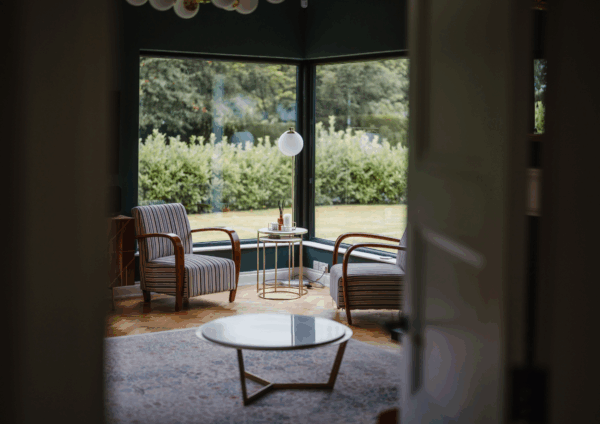
A sense of belonging doesn’t stop at the front door.
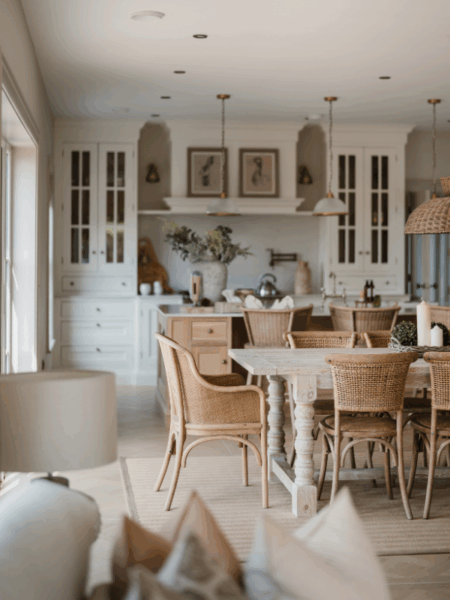
Inside, character can come from proportion, natural materials, considered joinery and rooms that have a clear purpose.
Not every space needs to be enormous or completely open plan.
Sometimes a smaller room, a window seat, a pantry, a framed view or a change in ceiling height creates far more atmosphere than simply adding square metres.
The aim is to create a home that feels layered and personal rather than one that feels like a showroom.
Character doesn’t have to mean old
A new home doesn’t need decades of history behind it to have character.
It needs a strong relationship with its site, thoughtful proportions, appropriate materials and spaces designed around the people who will live there.
Done well, contemporary architecture can feel every bit as rooted and timeless as a much older building.
The goal isn’t to make a new house pretend to be old.
It’s to create something that feels like it belongs exactly where it is.
Thinking about your own new home?
If you’re considering a new build, start with the site rather than a predetermined house style.
At Slemish Design Studio Architects, we design individual homes around their setting, the people who will live in them and the character they want to create.
That approach allows the architecture to grow from the place rather than simply being placed upon it.