How Long Does Planning Permission Take in Northern Ireland?
One of the first questions we’re asked at the beginning of a project is:
“How long will planning take?”
And understandably, most people are hoping for a nice, definite answer.
The reality is that planning permission is only one part of the process, and the time involved can vary considerably depending on the site, the proposal, the local planning authority and whether additional information is required.
So if you’re planning a new home, extension or renovation in Northern Ireland, here’s what you should allow for and what can influence the timescale.
1. Planning starts before the application is submitted
This is probably the biggest misconception.
The planning process doesn’t begin on the day the application goes in.
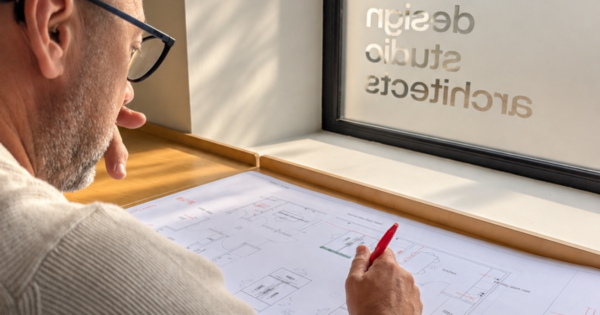
Before submission, there is work to do.
The site needs to be assessed. The planning history and relevant policies need to be understood. A brief needs to be developed and the design needs to respond appropriately to its surroundings.
Depending on the project, surveys, reports or input from other consultants may also be required.
Taking time at this stage can help create a stronger application rather than rushing to submit something that hasn’t been properly considered.
2. How long does a planning application take?
Once a valid application has been submitted, the timescale depends on the type and complexity of the proposal and the relevant council.
Straightforward applications may progress relatively smoothly.
Others can take considerably longer.
Consultations may be required with statutory bodies, planning officers may request additional information or amendments, and particular site constraints can introduce further stages into the process.
This is why we’d be cautious about promising that planning permission will be secured by a particular date.
The application can be prepared carefully, but once submitted, parts of the process sit outside the applicant’s or architect’s control.
3. What can delay planning permission?
There are plenty of reasons an application can take longer than hoped.
Issues relating to access, wastewater treatment, flooding, ecology, landscape impact, neighbouring properties or the principle of development itself can all require further consideration.
Sometimes consultees need additional information.
Sometimes the planning officer may ask for changes to the design.
And occasionally something emerges during the assessment that couldn’t reasonably have been anticipated at the beginning.
This doesn’t necessarily mean there is a serious problem with the application.
It simply means that planning isn’t always a straight line from submission to approval.
4. Does the site make a difference?
Absolutely.
Two people could be proposing similarly sized houses but have completely different planning experiences because their sites are different.
A site within an established settlement is very different from a rural site.
A replacement dwelling presents different considerations from a completely new house.
A listed building, conservation area or sensitive landscape can introduce another layer of assessment again.
This is one reason we’d always recommend understanding the planning potential of a site before committing to a particular house design.
And ideally, before buying the site.
5. Can good design help?
Good design can’t guarantee planning permission.
But a proposal that responds carefully to its context gives the planning authority something much more considered to assess.
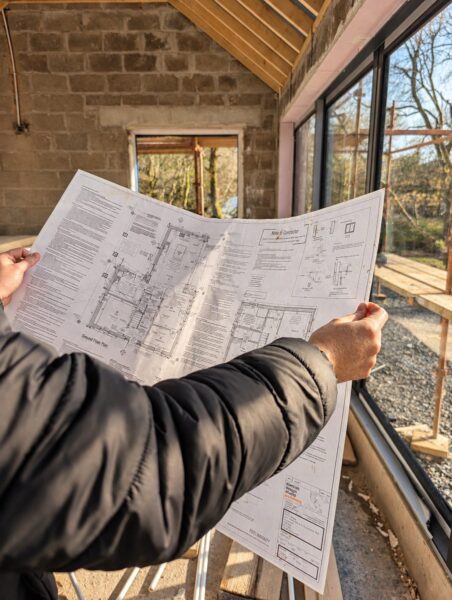
The position of the building, scale, form, materials, access and relationship with neighbouring properties or the surrounding landscape can all matter.
For us, planning isn’t something that happens after the architecture has been designed.
The two should develop together.
That doesn’t mean creating a bland house simply to get through planning.
It means understanding the constraints and finding opportunities within them.
6. What happens if the planners ask for changes?
This is fairly normal.
During the application process, a planning officer may raise concerns or suggest that aspects of the proposal need to be reconsidered.
Depending on the issue, revised drawings or additional information may then be submitted.
Sometimes the changes are relatively minor.
Other times, more substantial revisions may be required.
Having an architect involved means those requests can be considered in the context of the overall design rather than simply making isolated changes that gradually weaken the project.
7. What happens after planning permission?
Getting planning permission is a major milestone.
But it isn’t the finish line.
There may still be technical design work, Building Control requirements, structural engineering, energy calculations and other information to coordinate before construction can begin.
This is worth remembering when you’re working backwards from a hoped-for start date.
If you’d like to begin building next year, don’t assume you can wait until a few months beforehand to start designing.
Give the project breathing room.
How early should you speak to an architect?
Earlier than most people think.
You don’t need to have bought the site, finalised your brief or know exactly what your house should look like.
An early conversation can help you understand what’s possible, what information you need and what the likely route through planning might look like.
That can be particularly valuable if you’re considering buying land and want to understand the planning position before making a significant commitment.
Planning a project in Northern Ireland?
At Slemish Design Studio Architects, planning is considered from the earliest stages of the design process.
We work across Northern Ireland on new homes, renovations, extensions and other projects, helping clients understand the planning context and develop proposals that respond carefully to their site.
Good planning strategy isn’t about trying to predict every decision.
It’s about understanding the site, identifying the potential issues early and giving the application the strongest possible foundation.